
Created by people who wouldn't accept the tradeoff

A different way to close the gap between design and deployment
Every chip is engineered once, for a worst-case scenario, then run that way for its entire life, regardless of how it actually performs once deployed. It's a reasonable approach given what's been possible to measure in the field. It's also expensive.
Nhlanhla Mavuso saw an opening in that gap. As a graduate of the University of Pennsylvania's Vagelos Integrated Program in Energy Research (VIPER), an interdisciplinary program jointly run by Penn's School of Arts & Sciences and School of Engineering and Applied Science, he was trained to measure systems by how much energy they waste, not just whether they work. Looked at that way, the cost wasn't a footnote. It was the opportunity.
Fluid Silicon is the result: a platform that lets reconfigurable chips monitor their own condition in real time and operate closer to their real potential, rather than that fixed average.
Guided by a leading researcher in reconfigurable computing
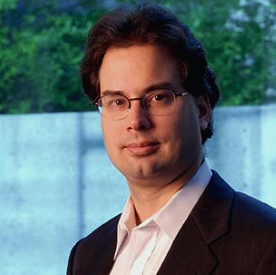
Turning that opportunity into a working platform took more than conviction. Dr. André DeHon, Co-Founder and Chief Scientific Advisor, brings decades of University of Pennsylvania research in reconfigurable computing to that work.
He is the Oliver C. Boileau Jr. and Nan Eleze Boileau Professor of Electrical Engineering at Penn, a Fellow of both the ACM and IEEE, and a member of the IEEE Reconfigurable Computing Hall of Fame and the National Academy of Inventors. His work on FPGA architecture, developed through Penn's Implementation of Computation Group, shaped the technical foundation behind Fluid Silicon's approach.
President's Sustainability Prize
That combination, a founder who wouldn't let the problem go and a researcher who'd spent decades on the underlying science, is what Penn recognized in 2026, awarding Nhlanhla Penn's President's Sustainability Prize for Fluid Silicon, one of the largest awards of its kind in higher education. The prize includes $100,000 in project funding and a $50,000 living stipend to support the project after graduation.
"Fluid Silicon's adaptive approach to chip performance exemplifies Penn's strength in applied innovation and offers a scalable path to greater efficiency and sustainability," said Penn President J. Larry Jameson.
Scaling the technology, wherever it's needed
That's the foundation. What's next is putting it to work everywhere the same tradeoff shows up: Fluid Silicon has already demonstrated its technology on real commercial FPGAs, and the next phase is deploying it across aerospace, hyperscale cloud, telecom, and finance, the industries where energy waste and reliability matter most, growing the technical team to get there.
Every chip running closer to its real potential is a step toward the world we're building: computing that scales without scaling its energy footprint.